Solar Greenhouse
Solar Greenhouse 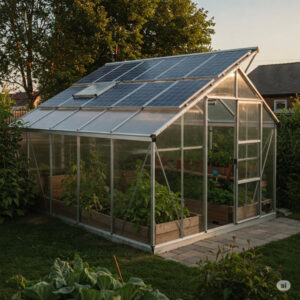
Harness the Sun: The Complete Guide to Solar Greenhouses
| Feature | Solar Greenhouse | Traditional Greenhouse |
| Energy Use | Mostly sun | Needs electricity/gas |
| Heating Cost | Low | High |
| Year-Round? | Yes | Not always |
| Off-Grid Ready | Yes | No |
| Start-Up Cost | Higher | Lower |
| Eco-Friendly | Very | Not really |
| Easy to Manage | Yes | Needs more upkeep |
So, What Exactly Is a Solar Greenhouse?
A solar greenhouse is a plant-growing haven that takes full advantage of the sun. Unlike the usual greenhouses that need extra heating or lighting, this one is designed to be energy efficient from the start. With walls and roofs made of clear materials like glass or polycarbonate, it lets sunlight pour in. Inside, materials like bricks, stone, or water barrels soak up the heat during the day and release it at night—keeping things cozy for your plants.
This kind of greenhouse doesn’t just save energy. It extends your growing season so you can enjoy homegrown herbs, veggies, and flowers even when there’s snow outside.
How Does a Solar Greenhouse Actually Work?
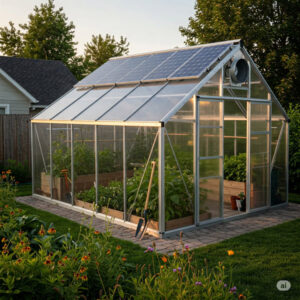
The magic of a solar greenhouse is in how it captures and holds onto heat. The structure usually faces south, which is ideal for soaking up as much sunlight as possible. The transparent panels let light in to warm up the interior. Inside, things like water barrels or concrete floors act like heat batteries. They store warmth during the day and slowly release it when the temperature drops at night.
The north wall and sometimes the sides are insulated to keep the heat from escaping. Good ventilation is also part of the deal—openable windows or roof vents help keep the air flowing, especially when it gets too hot during the day. And if you want to go all out, you can add solar panels to power fans or run an irrigation system.
Why Use a Solar Greenhouse?
- Year-round harvests: With a solar greenhouse, you can grow crops even during the winter months.
- Lower energy costs: Since it uses the sun’s energy, there’s less need for heating or artificial lighting.
- Sustainable living: Solar greenhouses are great for reducing your carbon footprint and embracing a more eco-friendly lifestyle.
- Food independence: Whether you’re living off-grid or just want to grow your own produce, this setup helps make that possible.
- Adaptable to any climate: Whether you’re in a cold, snowy area or a dry, sunny one, you can tailor a solar greenhouse to fit your conditions.
What Should a Solar Greenhouse Include?
- South-facing orientation: You’ll get the most sun exposure if your greenhouse faces true south.
- Sloped roof glazing: The angle of the roof matters. It helps capture sunlight more effectively in the winter months.
- Insulated north wall: This wall should be sealed and well-insulated to hold in heat. Painting it white reflects sunlight back onto your plants.
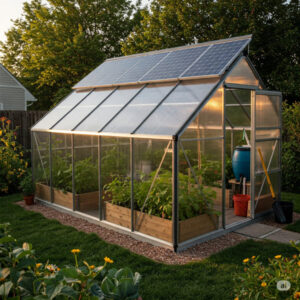
- Thermal mass inside: Use water barrels, bricks, or stone to absorb and slowly release heat.
- Insulated foundation: Foam board around the greenhouse base helps trap heat and keep the soil warm.
- Well-sealed joints: Make sure all windows, doors, and edges are sealed tight to avoid cold air leaks.
- Ventilation system: Install vents or solar-powered fans to circulate air and keep the temperature balanced.
How Is It Different from a Regular Greenhouse?
A regular greenhouse typically relies on electricity or gas to provide heat and light, which can get expensive. A solar greenhouse, however, is designed to work with nature, not against it.
- Energy source: Solar greenhouses use the sun and store heat naturally, while traditional ones often need artificial heating.
- Climate control: Solar setups regulate temperature better through passive heating and cooling.
- Operating cost: Over time, solar greenhouses are cheaper to run since they use minimal energy.
- Adaptability: They perform better in extreme weather conditions because of their efficient design.
Should You Build or Buy One?
- DIY approach: If you like hands-on projects, building your own solar greenhouse is a great option. It gives you full control over the design and can save money if you already have tools or materials.
- Pre-fab kits: If you’re not into building from scratch, buying a ready-to-assemble kit makes setup easier and faster.
Things to consider:
- Make sure the location gets full sun for most of the day.
- Check for zoning regulations and permits.
- Choose a site with good drainage and flat ground.
- Think about future needs like space for expansion or tool storage.
What Can You Grow in a Solar Greenhouse?
Even in the middle of winter, your solar greenhouse can support a wide range of crops.
- Cold-weather crops: You can grow kale, spinach, carrots, beets, green onions, and Swiss chard without much trouble.
- Warm-season crops: With proper heat storage, you can grow tomatoes, peppers, cucumbers, eggplants, and beans.
- Herbs and perennials: Basil, rosemary, mint, thyme, and lemongrass thrive in solar greenhouses year-round.
What Problems Might You Run Into?
- Too much heat in summer: Without ventilation, things can get too warm. Use fans, vents, or shade cloths to help manage the temperature.
- Heat loss in winter: Add more thermal mass and double-check insulation to keep the space warm overnight.
- High humidity: Poor airflow can lead to mold and mildew. Vents and fans keep air moving and moisture under control.
- Pests: Since greenhouses are warm and cozy, bugs might move in. Use natural pest control like neem oil or bring in beneficial insects.
Tips to Help You Get Started
- Check sunlight patterns: Use a sun-mapping app to find the best placement.
- Buy quality materials: Strong glazing and solid insulation go a long way.
- Track conditions inside: Use thermometers and humidity monitors.
- Plan for growth: Leave room to expand your setup if needed.
- Keep learning: Join gardening forums and watch videos to pick up new tricks and advice.
Conclusion
A solar greenhouse is a smart way to grow food year-round, reduce energy bills, and lessen your environmental impact. Whether you build it yourself or buy a kit, planning and setup are key. With a solid design and some patience, you’ll have fresh produce all year, no matter the weather.
🔑 Key Takeaway
A solar greenhouse isn’t just a cool structure—it’s a clever, energy-smart way to grow your own food all year long. By using sunlight as the main heat source, you can cut down on energy costs and keep those veggies thriving even in the dead of winter.
Frequently Asked Questions (FAQs): Solar Greenhouses
Q1. Can I turn my regular greenhouse into a solar one?
Yes! You can upgrade a standard greenhouse into a solar greenhouse by:
Adding insulation to retain heat
Incorporating thermal mass (like water barrels or stone) to store warmth
Reorienting the structure for better sun exposure
With these changes, your greenhouse will capture and hold more solar energy, making it more efficient and extending your growing season.
Q2. How long before a solar greenhouse pays for itself?
Most people see a return in 3–7 years. The payback period depends on:
Your initial investment
Local energy savings
How much food you grow
If you grow high-value crops or have high energy costs, you might see returns even sooner.
Q3. Will a solar greenhouse still work if I live in a cloudy climate?
Definitely.
Even in areas with limited sunlight, a solar greenhouse can maintain warmth if it’s well-insulated and includes sufficient thermal mass (such as water barrels or stone walls) to absorb and slowly release heat.
Insulation minimizes heat loss during cold or cloudy days.
Thermal mass stores heat during sunny periods and releases it when temperatures drop.
For additional support, solar panels can power supplemental heating, fans, or lighting to ensure plants thrive year-round.
Q4. Do I need electricity to run a solar greenhouse?
Not always.
A well-designed passive solar greenhouse can operate without any external electricity by relying on:
Strategic insulation and thermal mass to regulate temperature naturally
Natural ventilation to control humidity and airflow
However, adding solar panels allows you to:
Power fans to improve air circulation
Automate watering systems for consistent irrigation
Use supplemental lighting to boost plant growth during short winter days
This combination gives you more precise environmental control and convenience without relying on grid power.
Q5. Is it possible to use a solar greenhouse for a small business?
Absolutely!
Solar greenhouses are ideal for small-scale commercial growing because they:
Enable year-round production of herbs, greens, and specialty crops, increasing your market opportunities
Reduce energy costs by harnessing the sun’s free energy, improving your bottom line
Support sustainable and eco-friendly branding, which appeals to many customers
Allow you to sell fresh, local produce at farmers markets, restaurants, or through community-supported agriculture (CSA) programs
With the right setup, a solar greenhouse can be a profitable and environmentally responsible business asset.
Recommended Reading
Smart Greenhouse Humidity Control: Tips for Healthy, Happy Plants Crop RH Range Quick Tip Tomatoes 65–75% Avoid rot, keep airflow up Lettuce 50–60% Too much moisture = mildew Cucumbers 70–80% Likes it moist, vent well Herbs 60–70% Lower RH keeps leaves crisp Peppers 60–70% Don’t let it swing too much Strawberries 60–75% Watch for mold … Continue reading “Greenhouse Humidity Control”
Greenhouse Watering System Parts
Greenhouse Watering System Parts Main Components of an Efficient Greenhouse Watering System An efficient greenhouse watering system consists of several key components that ensure uniform, reliable, and resource-conscious irrigation. The main components are: Water Supply: The primary source of water can be a municipal supply, a well, or a storage tank. An intermediate storage … Continue reading “Greenhouse Watering System Parts”
Greenhouse Watering System Smart Greenhouse Watering Solutions That Actually Work System Best For Pros Cons Drip Beds, rows, containers Precise, water-saving Needs setup, can clog Capillary Mats Seedlings, small pots Even moisture, no wet leaves Not for big plants, clean often Soaker Hose Rows, garden beds Easy to use, covers a lot Not super precise, … Continue reading “Greenhouse Watering System”
Best Victorian Greenhouses for Your Backyard
Introduction Best Victorian Greenhouses for Your Backyard. Victorian greenhouses are renowned for their timeless beauty and unmatched charm. These structures, popular during the Victorian era, continue to captivate gardening enthusiasts with their intricate designs and elegant features. If you’re considering adding a greenhouse to your backyard, a Victorian-style structure could be the perfect choice. In … Continue reading “Best Victorian Greenhouses for Your Backyard”