Greenhouse Organic Fertilizers
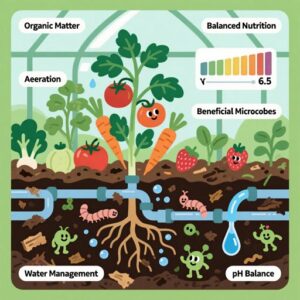
The Secret to Thriving Crops: Greenhouse Organic Fertilizers
| Fertilizer | Made From | Best For | Use Method |
| Compost | Scraps, yard waste | General soil health | Mix into soil |
| Vermicompost | Worm castings | Nutrients, microbes | Top-dress or mix in |
| Cow Manure | Aged cow waste | Leafy growth | Mix into topsoil |
| Chicken Manure | Aged poultry waste | Fruits, flowers | Use sparingly, composted |
| Seaweed Extract | Seaweed | Minerals, roots | Spray or water in |
| Fish Emulsion | Fish byproducts | Fast nitrogen boost | Dilute and apply |
| Rock Phosphate | Mined rock | Root strength | Blend into soil |
| Greensand | Marine sediment | Potassium, micros | Mix into beds |
Let’s Talk About Organic Fertilizers
- Definition: Organic fertilizers come from natural sources like compost, plant materials, and animal waste. They work by slowly releasing nutrients that feed both your plants and the soil.
Sources:
- Compost made from kitchen scraps or garden waste
- Manure from cows, chickens, or horses
- Seaweed, soybean meal, or alfalfa meal
- Rock phosphate, greensand, or gypsum
These fertilizers improve soil texture, retain moisture, and support microbial life that helps plants thrive.
Why Organic Fertilizers Work So Well in Greenhouses
- Soil improvement: Organic fertilizers help maintain soil structure, improving drainage and moisture retention.
- Microbial support: They feed the living organisms in the soil, making nutrients more available to plants.
- Reduced chemical buildup: In an enclosed environment like a greenhouse, synthetic fertilizers can cause salt buildup. Organic options avoid that issue entirely.
- Eco-friendly choice: They’re more sustainable and better for the planet because they’re made from renewable, biodegradable materials.
Organic Fertilizer Options for Your Greenhouse
- Compost and vermicompost: Compost adds nutrients and beneficial microbes, while vermicompost (worm castings) takes it up a notch with more concentrated nutrients and enzyme activity.
- Animal-based fertilizers: Cow manure is nitrogen-rich, great for leafy growth. Chicken manure offers high phosphorus, which is ideal for flowers and fruit. Always use composted manure to avoid burning roots.
- Plant-based fertilizers: Seaweed extract delivers minerals and natural growth hormones. Soybean and alfalfa meals promote strong root systems and soil health.
- Mineral-based fertilizers: Rock phosphate boosts phosphorus for root development. Greensand supplies potassium and micronutrients. Gypsum improves calcium and sulfur without changing soil pH.
- Liquid organic fertilizers: These include compost tea, fish emulsion, and molasses-based mixes. They’re great for foliar sprays and fertigation systems to deliver quick nutrients and boost soil life.
How to Apply Organic Fertilizers in Your Greenhouse
- Soil amendment: Before planting, mix compost or manure into the top 6–8 inches of soil.
- Top-dressing: Sprinkle fertilizer around the base of your plants. Water helps it soak into the roots.
- Fertigation: Mix liquid fertilizers into your irrigation system for even coverage.
- Foliar spraying: Apply diluted liquid fertilizer directly to the leaves for fast absorption.
Timing and frequency:
- Young plants need a balanced mix of nitrogen and phosphorus
- Flowering and fruiting plants do best with more phosphorus and potassium
- Apply solid fertilizers every 4–6 weeks
- Apply liquid fertilizers every 1–2 weeks depending on plant needs
Tips to Get the Most Out of Your Organic Fertilizers
- Test your soil: Check for nutrient levels and pH to understand what your soil needs.
- Balance nutrients naturally: Avoid loading too much nitrogen into the soil. Stick to balanced inputs.
- Rotate crops: Helps maintain soil nutrients and reduce disease and pest buildup.
- Observe your plants: Yellow leaves or stunted growth could be signs you need to adjust your feeding routine.
- Pair with organic pest control: Neem oil, beneficial insects, and garlic sprays can work alongside organic fertilizers for a healthier greenhouse.
Homemade Organic Fertilizers You Can Use in a Greenhouse
- Banana peel tea: Chop up 2–3 banana peels and soak them in a liter of water for 48 hours. The potassium-rich water is great for flowering plants.
- Eggshell calcium powder: Dry eggshells, grind them into powder, and sprinkle around your plants to boost calcium.
- Molasses microbial booster: Mix 1 tablespoon of unsulfured molasses into a liter of water and pour it into the soil weekly to energize soil microbes.
Common Issues and How to Solve Them
- Nutrient inconsistency: Organic inputs vary in strength. Mix different types to balance nutrients better.
- Odor problems: Some fertilizers, especially manures, can smell. Use well-composted materials and store them properly.
- Shelf life concerns: Liquid fertilizers spoil over time. Store in a cool, dark place and make small batches you can use quickly.
- Over-fertilization: Even organics can be overdone. Stick to a feeding schedule and adjust based on plant feedback.
Conclusion
Going organic in your greenhouse is one of the best moves you can make. From feeding your soil to improving plant health, organic fertilizers offer long-term benefits without the downsides of chemicals. Whether you use compost, seaweed extract, or a homemade banana peel tea, you’re setting your plants up for success. With the right application and a little observation, your crops will reward you with vibrant growth and nutrient-rich yields.
🔑 Key Takeaway
Organic fertilizers enrich your greenhouse environment by building healthier soil, feeding beneficial microbes, and delivering natural nutrients to your plants—all without synthetic chemicals.
FAQs: Organic Fertilizers and Soil Health in Greenhouse Growing
Q1. Can I use organic fertilizers in a hydroponic greenhouse?
Yes, you can use organic fertilizers in hydroponics, but choose the right type and monitor your system.
Liquid organic fertilizers, such as fish emulsion, seaweed extract, or compost tea, are commonly used in hydroponic setups.
Filtration matters: Organic fertilizers can introduce particles or residues that may clog pumps or emitters. Make sure your filtration system is robust enough to handle organic inputs.
System hygiene: Regularly clean reservoirs and lines to prevent buildup and biofilm from organic matter.
Q2. What makes vermicompost better than regular compost?
Vermicompost, produced by worms, is richer in nutrients and beneficial enzymes than standard compost.
Nutrient content: Vermicompost contains higher levels of plant-available nutrients, growth hormones, and beneficial microbes.
Soil health: It improves soil structure, water retention, and disease resistance more effectively than traditional compost.
Application: Use vermicompost as a soil amendment, in potting mixes, or to brew nutrient-rich teas for foliar feeding or root drenching.
Q3. Is it okay to use organic fertilizers on seedlings?
Definitely—just dilute them well to protect delicate roots.
Dilution: Seedlings need gentle nutrition. Mix organic fertilizers at half or quarter strength to avoid burning young roots.
Application: Apply as a light drench or gentle foliar spray. Lightly drench or mist seedlings, then check for stress or nutrient burn.
Q4. How should I store homemade organic fertilizers?
Proper storage keeps your fertilizers effective and safe for use.
Dry mixes: To prevent moisture and clumping, keep this product sealed in airtight containers in a cool, dry place.
Liquid mixes: Keep in dark, cool areas (like a cupboard or basement) to slow down decomposition. Use within a few weeks for best results, as organic liquids can ferment or spoil over time.
Labeling: Always label containers with contents and date of preparation.
Q5. Can I bury kitchen scraps directly into greenhouse soil?
It’s better to compost kitchen scraps before adding them to greenhouse soil.
Why compost first: Raw scraps can attract pests (like rodents or flies) and may harbor pathogens harmful to plants.
Composting: Convert scraps into finished compost or vermicompost before use. This process stabilizes nutrients and eliminates most pathogens.
Alternative: Use a bokashi bin or digester to pre-ferment scraps if you want to speed up the process.