Greenhouse Ventilation
Greenhouse Ventilation
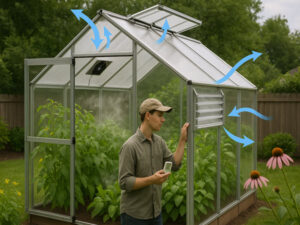
Smart Greenhouse Ventilation Solutions That Truly Work
| Type | How It Works | Good For | Pros | Cons |
| Natural | Vents + outdoor air | Mild weather | Cheap, simple | Needs good wind |
| Mechanical | Fans + controls | Hot/larger setups | Strong, reliable | Costs more |
Why Good Greenhouse Ventilation Really Matters
- Ventilation is essential: Without it, your greenhouse can overheat, stay too humid, or become a breeding ground for pests and disease. Hot air needs a way out, and fresh air needs a way in. That’s how you keep the temperature stable and prevent humidity from getting out of hand.
- CO₂ is critical: Plants need a steady supply of carbon dioxide to fuel photosynthesis. If your greenhouse is sealed up tight, CO₂ levels drop and growth slows down.
- Airflow prevents problems: Better airflow reduces the chances of fungus and insects taking hold in your growing space.
Natural Ventilation: Low-Tech, High-Impact
- Using nature’s tools: Natural ventilation takes advantage of wind and temperature differences to keep your greenhouse cool. If your area has decent airflow and mild weather, this could work well.
How it works:
- Roof vents let hot air rise and escape.
- Sidewall vents bring in cooler air from outside.
- Louvered openings give you control over how much air flows through.
- Best for: Medium to large greenhouses in places where the weather isn’t too extreme. It’s simple, affordable, and effective under the right conditions.
Mechanical Ventilation: When You Need Power and Precision
- When nature isn’t enough: In areas with high temperatures or little natural wind, mechanical ventilation does the heavy lifting.
Components of mechanical ventilation:
- Exhaust fans pull hot, stale air out from one end of the greenhouse.
- Intake louvers open up to let cooler air in when fans are running.
- Circulation fans keep air moving inside to eliminate stagnant pockets.
- Best for: Year-round greenhouses, commercial setups, or climates that demand more precision and power.
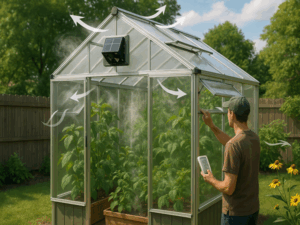
How to Choose the Right Ventilation for Your Greenhouse
- One size doesn’t fit all: Every greenhouse is different, so your setup should match your specific needs.
What to consider:
- Size and layout: Small hobby greenhouses may only need passive vents. Larger or commercial spaces usually need powered fans and smart controls.
- Climate: Hot areas need stronger cooling systems. Cooler climates benefit from humidity control and CO₂ balance.
- Plant types: Some crops need more humidity; others need it dry and warm.
- Automation: Automated vents, thermostats, and sensors are great if you’re away often or managing multiple greenhouses.
- Budget: Mechanical systems cost more but offer control and reliability. Passive systems are cheaper but need the right conditions to work.
Building a Ventilation Setup That Works
- Balance is key: A successful system needs to move air efficiently in and out. For every bit of air you push out, you need to bring in the same amount.
What to include:
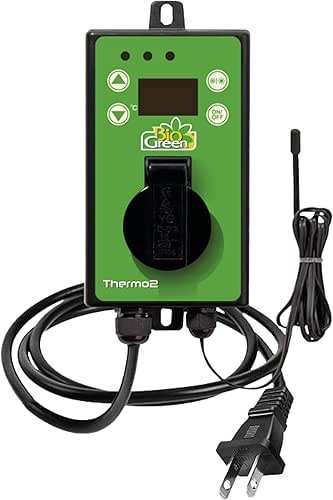
- Thermostats and controllers: These automate fans and vents based on internal readings.
- Shading systems: Reduce the heat entering the greenhouse, lowering the demand on ventilation.
- Sensors: Measure temperature, humidity, and CO₂ so the system can react in real time.
DIY vs. Commercial Ventilation Setups
- Going the DIY route: This works well for growers on a budget or those who like to build things themselves. Manual vents and basic fans can work fine in smaller, milder climates.
- Commercial systems: These are built for high performance. They’re automated, durable, and handle extreme temperatures or dense planting. While they cost more upfront, they save time and provide consistent results.
Common Ventilation Mistakes You’ll Want to Avoid
- Don’t overlook airflow requirements: Using undersized fans or vents means you’re not moving enough air.
- Avoid bad fan placement: Poorly placed fans can leave hot or humid pockets where problems develop.
- Seasonal changes matter: What works in the summer might not be right for winter. Adjust your setup as the seasons shift.
- Keep it clean and maintained: Dirty or broken fans and stuck vents reduce efficiency and can cause system failure.
- Don’t overventilate in cold months: Too much airflow in winter can chill your plants or dry them out too much.
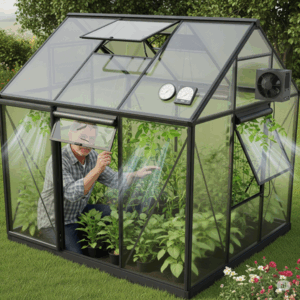
Going Green with Sustainable Ventilation
-
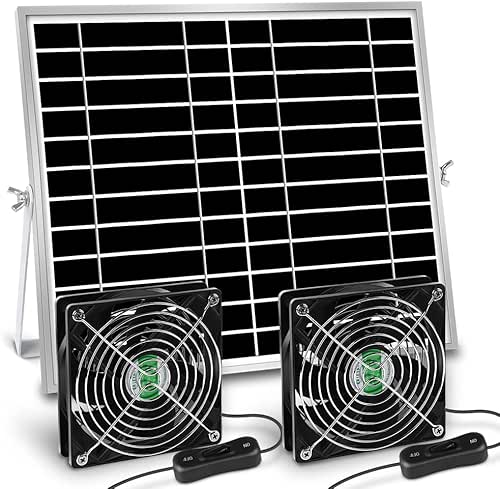
Solar-powered fans: These cut down electricity use and are perfect for remote or off-grid greenhouses.

-
Thermal vent openers: These use wax that expands with heat to open vents—no electricity needed.

-
Smart systems: IoT-connected devices track and control airflow based on live data, which makes your system more responsive and efficient.
-
Evaporative cooling pads: These cool incoming air using water and take pressure off your fans when it’s especially hot.

🔑 Key Takeaway
A well-ventilated greenhouse keeps temperatures balanced, humidity in check, and plants breathing happy—all of which add up to stronger, healthier growth
Frequently Asked Questions (FAQs): Greenhouse Ventilation & Air Quality
Ventilation plays a key role in overall plant well-being.. Here, we address common questions about maintaining, automating, and optimizing your greenhouse ventilation system.
1. How often should I replace the filters in my greenhouse fans?
Recommended Schedule:
Check fan filters monthly during peak growing seasons.
Why?
- Clogged filters reduce airflow, impacting ventilation efficiency.
- Clean or replace filters when you notice a drop in airflow or visible debris buildup.
- Some filters, such as carbon filters, may need replacement after 1–3 years of use, depending on manufacturer recommendations and intensity of use.
Tip:
Regular checks and cleaning extend filter life and keep your ventilation system running efficiently.
2. Can I run my ventilation system on a timer instead of sensors?
Short Answer:
Yes, timers can control ventilation, but sensors provide more precise, real-time adjustments.
Comparison:
- Timers: Simple, set schedules for fans or vents to operate at specific times.
- Sensors: React to actual temperature, humidity, or CO₂ levels, ensuring optimal conditions automatically.
Tip:
If budget allows, consider adding temperature or humidity sensors for smarter, more efficient ventilation control.
3. Is it okay to keep the greenhouse sealed during the winter?
Best Practice:
Do not keep your greenhouse completely sealed, even in winter.
Why?
- Some air exchange is necessary to prevent humidity buildup and water condensation, which can lead to mold and plant diseases.
- Use low-speed fans or partially open vents to maintain air movement and exchange.
Tip:
Monitor humidity levels and adjust ventilation as needed to balance warmth and moisture.
4. Do I need to ventilate at night?
Recommendation:
Yes, maintain some ventilation at night, though less aggressively than during the day.
Why?
- Plants continue to release moisture at night, and stagnant air can lead to high humidity and disease.
- Gentle airflow helps prevent these issues without significant heat loss.
Tip:
Use low-speed circulation fans or short ventilation cycles to keep air fresh overnight.
5. What’s the best way to add CO₂ if ventilation reduces it?
Options:
- Use CO₂ generators or tanks to enrich air in tightly sealed greenhouses.
- Balance CO₂ supplementation with necessary ventilation to avoid wasting added CO₂.
Tip:
Automate CO₂ injection to coincide with periods when vents are closed, maximizing efficiency.
Summary Table
| Question | Key Takeaway | Pro Tip |
|---|---|---|
| How often to replace fan filters? | Check monthly; clean or replace as needed | Replace carbon filters every 1–3 years |
| Timer vs. sensor for ventilation? | Timers work, but sensors give better control | Upgrade to sensors for real-time adjustments |
| Keep greenhouse sealed in winter? | No, always allow some air exchange | Use low-speed fans or crack vents |
| Ventilate at night? | Yes, but less aggressively | Use circulation fans for gentle airflow |
| Add CO₂ with ventilation? | Use CO₂ tanks/generators in sealed spaces | Inject CO₂ when vents are closed |
Conclusion:
Ventilation plays a huge role in how your greenhouse performs. It controls temperature, balances humidity, and gives plants the oxygen and CO₂ they need to thrive. Whether you go the natural route, install powered fans, or combine both approaches, the key is to match your system to your plants, climate, and greenhouse size. Do it right, and your plants will thank you with healthier growth, fewer pests, and better yields.
Consistent maintenance and smart automation of your greenhouse ventilation system will ensure healthy air quality and optimal growing conditions year-round. Regular filter checks, balanced air exchange, and thoughtful CO₂ management are key to success.
Recommended Reading
Smart Greenhouse Humidity Control: Tips for Healthy, Happy Plants Crop RH Range Quick Tip Tomatoes 65–75% Avoid rot, keep airflow up Lettuce 50–60% Too much moisture = mildew Cucumbers 70–80% Likes it moist, vent well Herbs 60–70% Lower RH keeps leaves crisp Peppers 60–70% Don’t let it swing too much Strawberries 60–75% Watch for mold … Continue reading “Greenhouse Humidity Control”
Greenhouse Watering System Parts
Greenhouse Watering System Parts Main Components of an Efficient Greenhouse Watering System An efficient greenhouse watering system consists of several key components that ensure uniform, reliable, and resource-conscious irrigation. The main components are: Water Supply: The primary source of water can be a municipal supply, a well, or a storage tank. An intermediate storage … Continue reading “Greenhouse Watering System Parts”
Greenhouse Watering System Smart Greenhouse Watering Solutions That Actually Work System Best For Pros Cons Drip Beds, rows, containers Precise, water-saving Needs setup, can clog Capillary Mats Seedlings, small pots Even moisture, no wet leaves Not for big plants, clean often Soaker Hose Rows, garden beds Easy to use, covers a lot Not super precise, … Continue reading “Greenhouse Watering System”
Best Victorian Greenhouses for Your Backyard
Introduction Best Victorian Greenhouses for Your Backyard. Victorian greenhouses are renowned for their timeless beauty and unmatched charm. These structures, popular during the Victorian era, continue to captivate gardening enthusiasts with their intricate designs and elegant features. If you’re considering adding a greenhouse to your backyard, a Victorian-style structure could be the perfect choice. In … Continue reading “Best Victorian Greenhouses for Your Backyard”