Cold Frame Greenhouses

Cold Frame Greenhouses:
A Simple Way to Keep Your Garden Growing Longer
Cold Frame Greenhouses
| Crop | Best Season | Temp Range | Quick Note |
| Lettuce | Spring/Fall | 45–65°F | Super easy and fast grower |
| Spinach | Spring/Fall | 40–70°F | Loves the cold |
| Radishes | Spring/Fall | 50–70°F | Quick harvest, low fuss |
| Carrots | Spring/Fall | 55–75°F | Slow grower, likes cool soil |
| Kale | Fall/Winter | 40–70°F | Gets sweeter after frost |
| Chard | Spring–Fall | 50–75°F | Tough and low-maintenance |
| Arugula | Spring/Fall | 45–65°F | Fast and peppery flavor |
| Beets | Spring/Fall | 50–70°F | Good for roots and greens |
What Exactly Is a Cold Frame Greenhouse?
- Definition: A cold frame is a low, clear box that traps heat and keeps your plants cozy even when it’s chilly outside. It’s usually built from a wooden or PVC frame and topped with a clear lid—think old windows or polycarbonate panels. The lid lets sunlight in and traps the warmth, creating a mini greenhouse effect.
- Function: Cold frames rely on passive solar energy and insulation, making them perfect for gardeners who want an easy, eco-friendly way to extend their growing seasons.
Why Use a Cold Frame?
- Extended growing seasons: Cold frames let you grow veggies earlier in the spring and later into the fall, giving you more produce throughout the year.
- Hardening seedlings: They provide a safe transition zone between indoor seed starting and outdoor planting, reducing transplant shock.
- Protection: Cold frames shield your plants from frost, wind, rain, and pests.
- Budget-friendly: Unlike full greenhouses, cold frames are inexpensive to build and maintain.

Different Types of Cold Frames and What They’re Made Of
DIY vs. pre-made:
- DIY cold frames are budget-friendly and customizable.
- Pre-made options are quicker to set up but cost more and may be less adaptable to your space.
Materials:
- Frame: Wood (like cedar), brick, PVC, or even concrete blocks.
- Lid: Recycled windows, greenhouse plastic, polycarbonate sheets, or clear acrylic panels.
- Insulation: Straw bales, foam boards, bubble wrap, or old blankets.
Portability:
- Portable cold frames are easy to move and adjust based on the sun’s angle.
- Permanent cold frames are ideal for long-term garden beds.

How to Build Your Own Cold Frame Greenhouse
Step 1: Choose the right location
Pick a spot with full sun, preferably facing south. Make sure the area drains well and isn’t prone to flooding.
Step 2: Gather your materials
- Wood, brick, or PVC for the base
- Clear cover (like old windows or polycarbonate panels)
- Hinges and handle for the lid
- Tools like drill, screws, saw, and measuring tape
- Optional: insulation material and thermometer
Step 3: Construct the frame
Build a box with the back wall slightly higher than the front to create a slope. Attach the clear lid with hinges so it can be opened for ventilation.
Step 4: Prepare the soil
Loosen and enrich the soil beneath the frame with compost.
Step 5: Monitor the environment
Use a thermometer to track temperature. Vent the lid during the day and close it at night to maintain warmth.

What to Grow in a Cold Frame
Cool-season vegetables:
- Lettuce
- Spinach
- Kale
- Arugula
- Radishes
- Carrots
- Beets
- Turnips
Seed starting in early spring:
- Tomatoes
- Peppers
- Eggplants
Winter-hardy greens:
- Swiss chard
- Mâche
- Mustard greens
Keeping Your Cold Frame in Top Shape
- Ventilation: Open the lid on warm, sunny days to prevent overheating. Use a stick or automatic opener.
- Watering: Water less frequently, as cold frames retain moisture. Always water early in the day.
- Temperature control: Ideal temps range from 55°F to 75°F during the day. Add insulation during cold nights.
- Insulation techniques: Use straw bales around the outside or bubble wrap under the lid. Cover with blankets during freezing nights.
- Soil health: Rotate crops each season, add compost regularly, and avoid overplanting the same area.

Watch Out for These Common Cold Frame Mistakes
- Overheating: Leave the lid closed too long on sunny days, and you’ll risk cooking your plants.
- Bad location: If it’s too shady or poorly drained, plants won’t thrive.
- Lack of airflow: Without ventilation, mold and mildew can build up quickly.
- Weak construction: A poorly sealed or unstable lid won’t protect against wind, animals, or rain.
Budget and Cost Considerations
DIY models:
- Use salvaged materials to keep costs low.
- Expect to spend $20–$80 depending on what you have on hand.
Pre-made units:
- Prices range from $100–$300, often with extra features.
Long-term savings: Cold frames reduce the need for grow lights, heating mats, and indoor seed-starting equipment.
Now that we have a clear understanding of the factors to consider, let’s explore some top recommendations for cold frame greenhouses that meet these criteria.
No 1:
Wooden Garden Portable Greenhouse Cold Frame


2-Tier Wooden Cold Frame Garden Greenhouse Raised Flower Planter Shelf Bed Protection 6057-0160 (Natural)
- Adjustable Shelf: Easily raise or lower the shelf in this mini greenhouse to fit a wide range of plant sizes. Use the four preset screw holes or drill your own to fully customize the shelf height and meet your gardening needs.
- Openable Roof: Secure the roof in an open position with the side bolt for improved airflow. Adjust the vent size by repositioning the screws along the side rods to create a healthy ventilation system that adapts to changing weather conditions.
- Water Drainage Groove Design: Built-in grooves on the roof channel rainwater away, preventing buildup and promoting efficient drainage. This smart design lets you use the cold frame outdoors, even during wet weather.
- Stable Construction: Four sturdy metal brackets reinforce the structure, adding strength and safety to your garden greenhouse setup.
- Durable Fir Wood: Made from solid fir wood, this greenhouse features a polished finish that adds rustic charm while standing up to outdoor elements.
No 2:
Wooden Cold Frame Greenhouse

Wooden Cold Frame Greenhouse, Raised Flower Planter Shelf Protection for Outdoor Indoor Use, 0760 (Orange)
- Sturdy Structure: The cold frame greenhouse is made of fir wood which is durable and sturdy, offers long-term reliable use. And the polish and cutting workmanship on this outdoor greenhouse is smooth, allowing painting and staining on it without any other process
- Adjustable Shelf: The shelf of this mini greenhouse could be freely adjusted height to fit various types of plants, which meets all your needs. (Five screw holes preset, you can also make holes by yourself to determine the height of the shelf)
- Efficient Protection: Garden greenhouse used transparent polycarbonate panels, which have maximum light transmission function while retaining heat for early seed sprouting and for protecting plants late in the season, your plants could enjoy the sun and grow healthily
- Openable Roof: The Bolt on the side could be used to fix the top keep open, and the size of the vents can be controlled by holding the screws in different rods position, providing a healthy ventilation system to your plants in different weather
- Convenient Installation: This greenhouse kit is included clear instructions, it’s very easy to follow. Every part is clearly labeled, all tools you need are also included
No 3:
MCombo Wooden Garden Portable Greenhouse Cold Frame
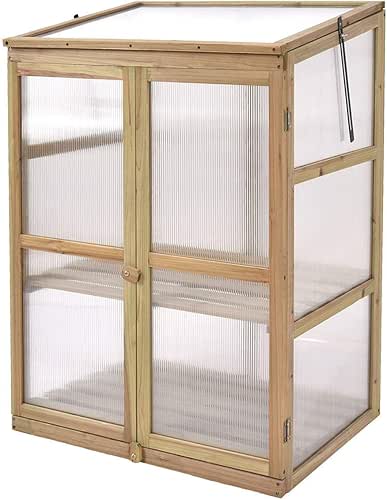
Portable Wooden Cold Frame Greenhouse Raised Flower Planter Protection (30.0″X22.4″X42.9″)
- Double Shelves — Double shelves provide more space for plants for various types of plants and elegant and simple design. You could get more room for your plant and it could give your patios, balconies, decks and gardens a touch of green, without any fuss.
- Foldable Top— Two top parts of this product could be open and close, and two bolts on the two sides which could be used to fix the top. And in the sunny day you could open it to let your plants absorb the sunlight and in rainy, you could close the top to keep it away from the rain.
- Solid Structure–Structured with heavy-duty wood for extended durability, and the structure follows the scientific principle and is strong enough to hold seed trays, pots and plant growth light.
- Easy Movement and Assembly–All parts are detachable, so you can set it up wherever you want to, and move it when the seasons shift. No tools required.
- 100% Satisfaction Guaranteed–We would try our best to give you satisfied shopping experience, if there is quality, we would make best solution to solve the problem.
No 4:
MCombo 2-Tier Wooden Cold Frame Garden Greenhouse

2-Tier Wooden Cold Frame Garden Greenhouse Raised Flower Planter Shelf Bed Protection 6057-0160 (Orange)
- Adjustable Shelf: The shelf in this mini greenhouse can be easily adjusted in height to accommodate various types of plants, meeting all your needs (It has four preset screw holes, but you can also create your own holes to customize the shelf height)
- Openable Roof: The bolt on the side can be used to secure the roof in the open position, while the size of the vents can be adjusted by placing the screws in different positions along the rods, it setup ensures a healthy ventilation system for your plants, adapting to various weather conditions
- Water Drainage Groove Design: The roof grooves of the wooden cold frame are designed to prevent rainwater from accumulating on the roof, ensuring effective drainage, this feature allows the cold frame to be used outdoors even during rainy days
- Stable Device: The garden greenhouse features four metal brackets for added stability and safety
- Fir Wood: The wooden greenhouse is crafted from pure fir wood, with a polished exterior that showcases a rustic style
No 5:
Giantex Garden Portable Wooden Cold Frame Greenhouse
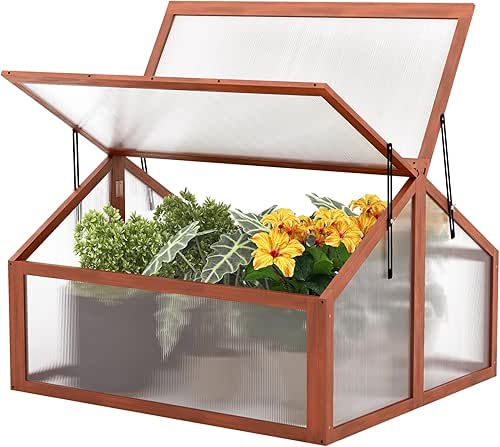
Portable Wooden Cold Frame Greenhouse Raised Flower Planter Protection (35.4″X31.3″X23.0″)
- Foldable Top— Two top parts of this product could be open and close, and two bolts on the two sides which could be used to fix the top. And in the sunny day you could open it to let your plants absorb the sunlight and in rainy, you could close the top to keep it away from the rain.
- Beautify Green Spaces and Large Capacity— Big storage capacity for various types of plants and elegant and simple design. Giving your patios, balconies, decks and gardens a touch of green, without any fuss.
- Solid Structure–Structured with heavy-duty wood for extended durability, and the structure follows the scientific principle and is strong enough to hold seed trays, pots and plant growth light.
- Easy Movement and Assembly–All parts are detachable, so you can set it up wherever you want to, and move it when the seasons shift. No tools required.
- 100% Satisfaction Guaranteed–We would try our best to give you satisfied shopping experience, if there is quality, we would make best solution to solve the problem.
Conclusion
Cold frame greenhouses are one of the smartest ways to make the most of your garden all year long. They’re easy to build, affordable, and packed with benefits. Whether you’re hardening off seedlings, extending your growing season, or overwintering hardy crops, a cold frame gives you more control and more food—without complicated systems or high costs.
🔑 Key Takeaway
Using a cold frame greenhouse is a smart, cost-effective way to extend your growing season, protect your crops, and get more out of your garden—without needing electricity or a big budget.
Frequently Asked Questions (FAQs): Cold Frames
Q1. Can I build a cold frame without any tools?
Yes, you can build a simple cold frame with no tools at all, though sturdier builds will need basic tools.
-
- No-tools method: Stack straw bales to create the sides of your frame and lay an old window, clear plastic, or glass pane on top. This setup traps heat and protects plants from wind and frost, making it perfect for quick, temporary use.
- For more durability: If you want a cold frame that lasts through multiple seasons, you’ll need to use wood or other sturdy materials. This will require basic tools like a saw, screwdriver, or drill to cut and assemble the frame.
- Tip: Even a simple, no-tools cold frame can make a big difference for early seedlings or extending your harvest in the fall.
Q2. Do I need to take my cold frame apart in the summer?
Not necessarily. You have several options for summer use or storage:
-
- Move it to the shade: If your cold frame is lightweight, simply move it to a shady spot so it doesn’t overheat.
- Leave the lid open: Prop the lid open or remove it altogether to allow airflow and prevent high temperatures from building up inside.
- Repurpose it: Use the cold frame as a mini screened enclosure to protect young plants from pests, or as a hardening-off station for seedlings before transplanting.
- Storage: If you prefer, you can disassemble and store your cold frame until cooler weather returns, but many gardeners keep theirs in use year-round by adapting it to the season.
Q3. Can I use a cold frame indoors?
Cold frames are designed for outdoor use and aren’t practical indoors.
-
- Sunlight: Cold frames rely on natural sunlight and outdoor temperature swings to create a warm microclimate for your plants.
- Indoor limitations: Inside your home, you won’t get enough direct sun, and the frame won’t provide the right environment for plant growth.
- Better alternatives: For indoor gardening, use grow lights, a seed-starting tray, or a small indoor greenhouse to provide the light and warmth your plants need.
Q4. What’s the best size for a cold frame?
A common size is 3 feet by 6 feet, but it depends on your space and what you want to grow.
-
- Why this size works: It’s wide enough for several rows of seedlings or greens, but narrow enough that you can reach the back without stepping inside.
- Custom sizing: Adjust the length or width to fit your available space or specific needs. For example, a 2×4 foot cold frame works well for small patios or balconies.
- Accessibility: Try to keep the depth (front to back) under 4 feet so you can easily reach all your plants for watering and harvesting.
Q5. Do cold frames work in very cold climates?
Yes, cold frames can be effective even in freezing temperatures, with a few extra steps:
-
- Add insulation: Line the inside walls with straw bales, foam boards, or even leaves to help retain heat.
- Bank soil: Mound soil or mulch around the outside of the frame for extra insulation.
- Double up: Use two layers of clear plastic or add a floating row cover inside the frame for additional protection on the coldest nights.
- What you can grow: Cold-hardy crops like spinach, kale, and lettuce can thrive in a well-insulated cold frame, even when it’s freezing outside.
Recommended Reading
Smart Greenhouse Humidity Control: Tips for Healthy, Happy Plants Crop RH Range Quick Tip Tomatoes 65–75% Avoid rot, keep airflow up Lettuce 50–60% Too much moisture = mildew Cucumbers 70–80% Likes it moist, vent well Herbs 60–70% Lower RH keeps leaves crisp Peppers 60–70% Don’t let it swing too much Strawberries 60–75% Watch for mold … Continue reading “Greenhouse Humidity Control”
Greenhouse Watering System Parts
Greenhouse Watering System Parts Main Components of an Efficient Greenhouse Watering System An efficient greenhouse watering system consists of several key components that ensure uniform, reliable, and resource-conscious irrigation. The main components are: Water Supply: The primary source of water can be a municipal supply, a well, or a storage tank. An intermediate storage … Continue reading “Greenhouse Watering System Parts”
Greenhouse Watering System Smart Greenhouse Watering Solutions That Actually Work System Best For Pros Cons Drip Beds, rows, containers Precise, water-saving Needs setup, can clog Capillary Mats Seedlings, small pots Even moisture, no wet leaves Not for big plants, clean often Soaker Hose Rows, garden beds Easy to use, covers a lot Not super precise, … Continue reading “Greenhouse Watering System”
Best Victorian Greenhouses for Your Backyard
Introduction Best Victorian Greenhouses for Your Backyard. Victorian greenhouses are renowned for their timeless beauty and unmatched charm. These structures, popular during the Victorian era, continue to captivate gardening enthusiasts with their intricate designs and elegant features. If you’re considering adding a greenhouse to your backyard, a Victorian-style structure could be the perfect choice. In … Continue reading “Best Victorian Greenhouses for Your Backyard”