Greenhouse Pest Management
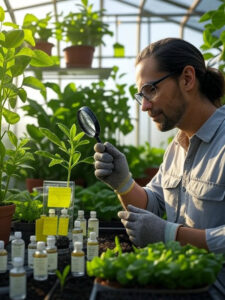
Greenhouse pest management works best as a repeatable process: inspect incoming plants, scout the crop, identify the organism, choose a compatible response, and check the result. A damaged leaf or an insect on a sticky card is evidence to investigate, not an automatic reason to spray everything.
Integrated pest management, or IPM, combines prevention, monitoring, cultural and physical controls, biological control, and appropriate pesticide use when warranted. The action depends on the pest, crop, growth stage, and consequences of waiting.
1. Identify the pest before choosing a treatment
Inspect growing tips, leaf undersides, flowers, stems, and the root-zone surface. Use a hand lens and record what you find. Nutrient disorders, heat damage, disease, and spray injury can resemble insect feeding.
| Pest group | Common clues | Useful next check |
|---|---|---|
| Aphids | Colonies on tender growth, shed skins, honeydew, distorted leaves. | Inspect new growth and leaf undersides; identify species where needed. |
| Whiteflies | Small white adults and immature stages on leaf undersides. | Examine both plant samples and monitoring cards. |
| Spider mites | Fine stippling, mites or eggs under leaves, sometimes webbing. | Use magnification; distinguish pest mites from beneficials. |
| Thrips | Scarring or silvery patches, distorted flowers, dark fecal specks. | Inspect flowers and young growth and compare with card catches. |
| Fungus gnats | Small adults near growing media and possible larval activity. | Identify adults and inspect root-zone conditions; shore flies differ. |
| Mealybugs or scales | Cottony material, attached bumps, honeydew, hidden colonies. | Inspect stems, crevices, leaf axils, and incoming plants closely. |
If identification is uncertain, preserve a useful sample or clear magnified images for an extension diagnostic service. A control chosen for the wrong pest can waste time and interfere with beneficial organisms.
2. Stop introductions and remove reservoirs
Inspect new plants, cuttings, containers, and reused materials before adding them to the main crop. Keep incoming or suspect plants separated and reinspect according to the pest risk and life cycle; a few symptom-free days do not prove they are pest-free.
Remove weeds, spent crops, and debris that harbor pests. Clean benches, tools, and containers using methods suitable for those materials and the production system. Cleanliness reduces pest opportunities; it is not the same as sterilizing an occupied greenhouse.
Inspect doors, vents, and screens for gaps. Choose screen mesh for the target pest and include its airflow resistance in the ventilation design.
Keep growing media and irrigation practices appropriate to the crop. Chronic puddles and algae can support nuisance-fly problems, but deliberately drying every crop excessively can create new stress.
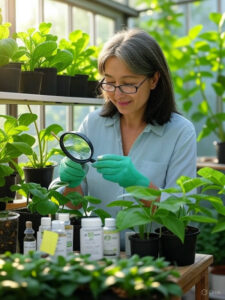
3. Use a consistent scouting route
Inspect regularly through the same mapped zones, with extra attention to entrances, new shipments, previous hot spots, and susceptible crops. A weekly recorded inspection is a useful baseline for many programs, with more frequent checks where pest pressure or crop sensitivity requires it.
Number monitoring cards and keep their positions and exposure periods comparable. Position them for the target insect and raise them as the crop grows where appropriate.
Yellow sticky cards detect many flying adults, but do not measure every life stage. Most spider mites and wingless aphids will not be represented adequately by card counts. Pair cards with direct plant inspection.
Differentiate beneficial insects on the cards as well. Traps can capture released natural enemies, so coordinate their use and placement with the biological-control program.
| Record | Example of useful detail |
|---|---|
| Location and crop | Bench number, variety, growth stage, and affected plants. |
| Observation | Identified pest, life stage, numbers, damage, and natural enemies. |
| Monitoring interval | Card number, dates exposed, and plants examined. |
| Action and result | What changed, when it was done, and what the follow-up found. |
4. Decide when action is warranted
Use crop-specific thresholds and production goals where available. A small population may matter more in a propagation area, on a highly susceptible crop, or where a pest transmits a virus than on a tolerant ornamental near the end of production.
Do not wait for a large outbreak simply because IPM is described as threshold-based. Prevention and early biological-control releases may need to begin before visible damage accumulates.
Mark hot spots, separate infested material when practical, and avoid moving pests through routine crop handling. Reinspect nearby plants before assuming the problem is confined to one pot.
5. Match biological controls to the pest and conditions
Natural enemies differ in host range, preferred pest stage, temperature needs, and release method. “Ladybugs,” “predatory mites,” and “parasitic wasps” are not interchangeable treatments for every greenhouse insect.
Choose the specific organism with an experienced biological-control supplier, using the identified pest, crop, and climate. Plan delivery, storage, release sites, and follow-up before the shipment arrives.
Review pesticide residues and side-effect information before releasing beneficials. Some residues can remain harmful long after a spray has dried. Do not assume “organic” or “natural” means compatible with a particular natural enemy.
Release rates and intervals should come from the selected program and monitoring results, not a universal every-two-weeks rule. Check establishment and pest trends after releases.
6. Use physical and cultural measures appropriately
Where suitable, remove heavily infested plant material, improve sanitation, adjust plant spacing, and correct irrigation problems. Handle discarded material so pests do not simply move back onto the crop.
Water sprays can dislodge some exposed insects on tolerant plants, but can also damage tissue, wet the crop, or move organisms. Use a method appropriate to the identified problem rather than treating all plants the same way.
Do not recommend household alcohol, dish detergent, garlic, or chili mixtures as universal greenhouse treatments. Plant sensitivity, exposure, residues, and efficacy vary. Use properly supported controls and follow applicable product directions.
Original trap links: two different purposes
Affiliate disclosure: these are affiliate links. Greenhouse-Guide may earn a commission from qualifying purchases. As an Amazon Associate, Greenhouse-Guide earns from qualifying purchases.
Yellow sticky monitoring cards
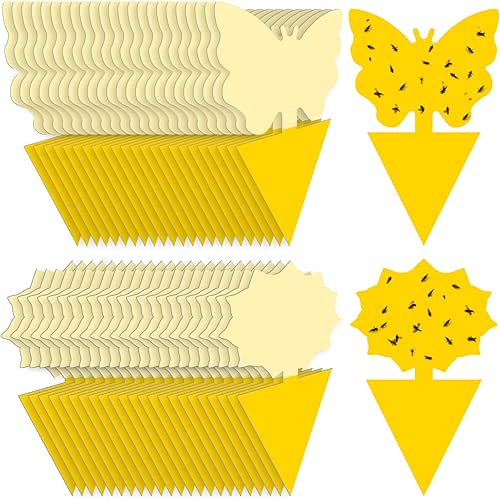
Useful for monitoring susceptible flying adults when placed and counted consistently. They will not show every pest or life stage and can capture beneficial insects.
Catchmaster Japanese beetle lure traps
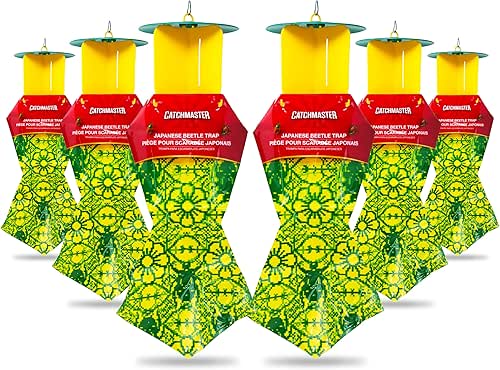
This is a different tool from greenhouse monitoring cards. Japanese beetle lure traps can attract more beetles than they catch and increase nearby damage; extension guidance does not recommend them as routine plant protection. The original product link is retained for identification, not as a greenhouse treatment recommendation.
7. If using pesticides, check the exact product directions
Select a product permitted for the intended crop and use site under the applicable label and local requirements. Check that edible crops, enclosed growing conditions, and the intended application are covered; a garden use elsewhere does not automatically establish greenhouse suitability.
Read the container label and any approved supplemental directions for rate, coverage, restrictions, application interval, personal protective equipment, ventilation, re-entry, and harvest timing. Do not replace those requirements with a generic recommendation to wear a mask or spray after sunset.
Review phytotoxicity cautions and test crop tolerance as directed. Check compatibility with beneficials, pollinators, oils, sulfur, and any other treatments before combining or sequencing products.
Where a resistance-management program calls for rotation, compare mode-of-action groups rather than simply alternating brand names. Avoid unapproved mixtures or improvised higher doses.
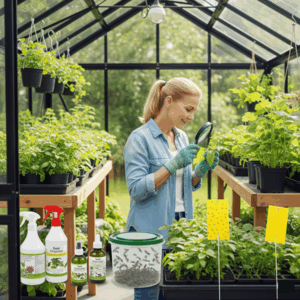
8. Follow up and measure the result
Return to the marked areas after an interval appropriate to the action and pest life cycle. Compare direct plant observations and card trends over consistent sampling periods.
Old feeding damage will not disappear, so assess new growth and live pest stages. A lower adult card count alone does not prove eggs and immature stages have been controlled.
Record what worked and what failed, including identification uncertainty, coverage, environmental conditions, and prior residues. Use that information to refine the next crop cycle.
Frequently asked questions
Are sticky cards enough to stop an infestation?
Routine monitoring cards are primarily an early-warning and trend tool. They do not replace plant inspection or a response aimed at the damaging life stages.
Will raising humidity eliminate spider mites?
No. Climate can affect pests and natural enemies, but humidity manipulation alone is not reliable eradication and can increase disease risk. Keep the crop’s needs central.
Does organic growing mean no pesticides?
No. Organic production can use certain permitted pest-control products, but suitability, directions, and certification requirements still apply. Biological and cultural measures also need careful selection.
Related guides and technical references
- Greenhouse Humidity Control.
- Greenhouse Watering System.
- UMass Extension: scouting and decision making.
- Oklahoma State Extension: greenhouse arthropod pests.
- Cornell: insect management and biological controls.
- UMass: preparing a biological-control program.
- Utah State Extension: understanding pesticide labels.
- Iowa State Extension: Japanese beetle trap limitations.