Best Large Greenhouses for your backyard
Choosing the best large greenhouses for your backyard can transform an ordinary garden into a more productive growing space. A spacious greenhouse gives gardeners room to cultivate vegetables, herbs, flowers, seedlings, and specialty plants while providing protection from changing outdoor weather conditions.
Unlike compact greenhouse kits, large backyard greenhouses offer additional floor space, greater interior height, and more flexibility for growing benches, raised beds, irrigation systems, and separate planting areas.
However, selecting the right greenhouse involves more than choosing the largest structure available. Glazing materials, frame construction, ventilation, anchoring, local climate, and long-term operating costs all affect how well a greenhouse performs.
This guide compares five large greenhouse recommendations from the original article and explains the important factors to consider before purchasing, installing, and maintaining a backyard greenhouse.
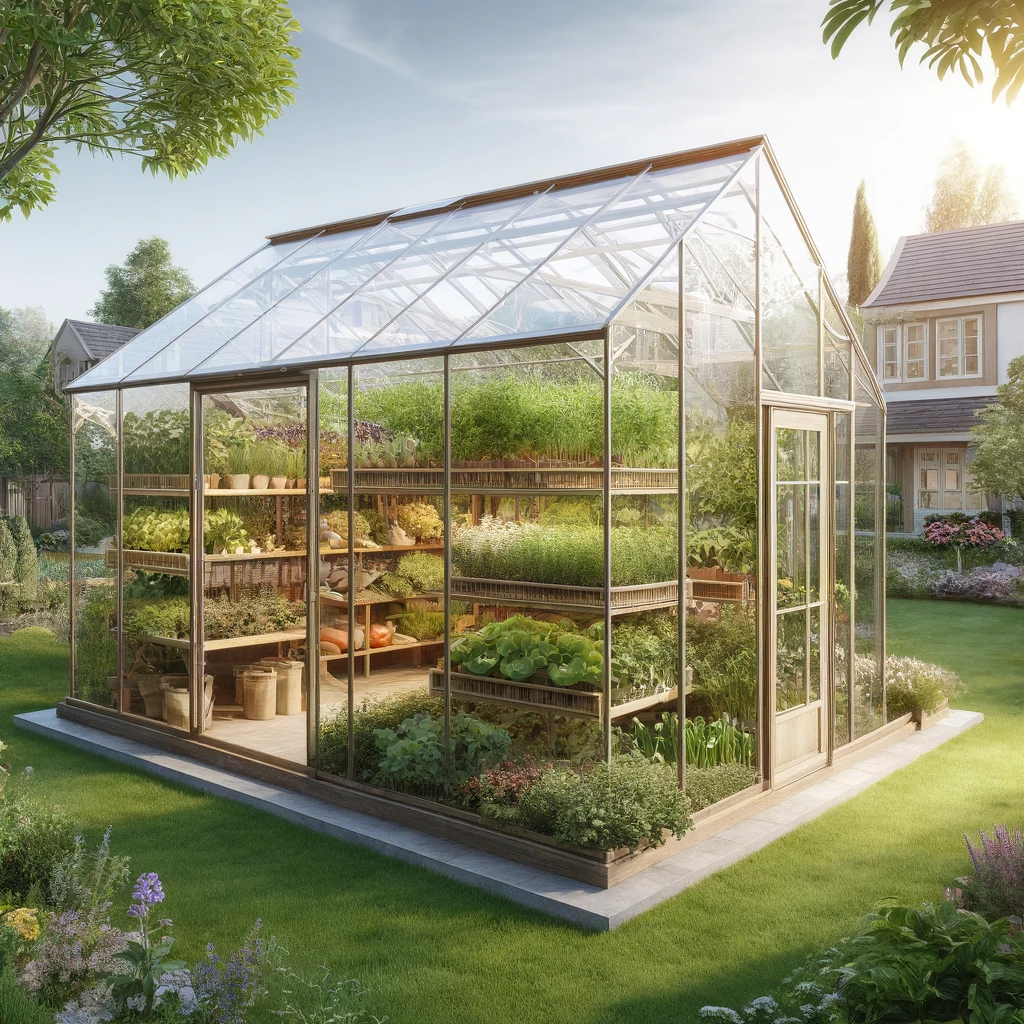
What Is Considered a Large Backyard Greenhouse?
A large backyard greenhouse is a growing structure that provides enough space for substantial plant collections, multiple growing beds, or specialized gardening equipment.
There is no universal size that defines a large greenhouse. For some homeowners, an 8-by-12-foot structure is substantial, while others may consider 10-by-20-foot or larger greenhouses appropriate for their needs.
The most important consideration is whether the greenhouse provides sufficient usable space for your intended plants, equipment, and walkways.
What Can You Grow in a Large Greenhouse?
- Tomatoes, peppers, cucumbers, and other warm-season vegetables.
- Lettuce, spinach, kale, and other leafy greens.
- Herbs such as basil, parsley, oregano, and thyme.
- Seedlings and young transplants.
- Flowers and ornamental plants.
- Container-grown fruiting plants.
- Climbing crops supported by trellises.
- Suitable plants in hydroponic growing systems.
The crops you can grow successfully depend on sunlight, temperature, ventilation, irrigation, and the environmental conditions maintained inside the greenhouse.
Factors to Consider Before Choosing a Large Greenhouse
Size and Available Backyard Space
Measure the installation area carefully, including the space required for doors, walkways, drainage, maintenance, and access to utilities.
Consider both the exterior footprint and usable interior dimensions. A greenhouse with wide growing beds but narrow walkways may be less convenient than a slightly larger design with a practical layout.
Greenhouse Height
Additional height can provide room for climbing crops, hanging containers, shelving, and better air circulation.
However, overall height does not tell the whole story. Sidewall height and door clearance are also important.
Frame Materials
Large greenhouses commonly use galvanized steel, aluminum, or wood framing.
Steel is frequently used in tunnel greenhouses, aluminum is popular in rigid-panel greenhouse kits, and wood provides a traditional appearance.
Each material requires appropriate structural design and maintenance.
Greenhouse Glazing
Common greenhouse coverings include polyethylene film, reinforced polyethylene fabric, polycarbonate panels, and glass.
Glazing affects insulation, light transmission, durability, installation requirements, and cost.
Ventilation and Temperature Control
Large greenhouses require sufficient ventilation to remove excess heat and humidity.
Roof vents, side openings, exhaust fans, circulation fans, and shade cloth can help manage growing conditions.
Foundation and Anchoring
A large greenhouse must be properly secured to a suitable foundation or anchoring system.
Always review the manufacturer’s wind and snow-load ratings and compare them with local building requirements.
Budget and Operating Costs
Consider the complete project cost, including the greenhouse kit, foundation, installation, irrigation, ventilation, heating, electrical work, and maintenance.
Best Large Greenhouses Compared
The following five greenhouse recommendations were included in the original article. They represent different approaches to large backyard greenhouse gardening, from a spacious tunnel greenhouse to rigid-panel aluminum and wooden greenhouse designs.
Compare their features in the chart below, then review the individual greenhouse descriptions immediately afterward.
| Greenhouse | Key Features | Best For |
|---|---|---|
| Greenhouse A: 20 x 10 ft Tunnel | Galvanized steel frame, reinforced PE cover, micro-drip irrigation and misting system. | Gardeners seeking substantial growing space in a tunnel-style greenhouse. |
| Greenhouse B: Wooden Polycarbonate | Wooden frame, multiwall polycarbonate panels, adjustable roof ventilation, approximately 96 x 190.2 inches. | Gardeners wanting a traditional wooden greenhouse with generous interior space. |
| Greenhouse C: CDCASA 10 x 12 ft | 4 mm twin-wall polycarbonate, aluminum frame, adjustable roof ventilation, rain gutters, and quick-connect assembly. | Gardeners seeking a spacious rigid-panel greenhouse. |
| Greenhouse D: 12 x 13.5 ft | 6 mm twin-wall polycarbonate, aluminum frame, four vents, double doors, and approximately 9 ft overall height. | Gardeners prioritizing height, ventilation, and substantial growing capacity. |
| Greenhouse E: Snap & Grow | Clear polycarbonate panels, aluminum frame, galvanized steel base, roof vents, and split door. | Gardeners seeking a clear-panel greenhouse with convenient access and assembly features. |
Important: Product listings, specifications, included accessories, and availability may change. Confirm current dimensions, glazing specifications, structural ratings, and installation requirements before purchasing.
Top 5 Large Greenhouse Recommendations for Your Backyard
These five greenhouse options appeared in the original article. Each offers different features and construction methods that may suit particular gardening needs.
Affiliate disclosure: Some product links may be affiliate links. Qualifying purchases may earn this website a commission at no additional cost to you.
Greenhouse A: 20 x 10 ft Walk-In Tunnel Greenhouse with Irrigation
Greenhouse A is a large tunnel-style greenhouse designed to provide extensive growing space for vegetables, herbs, flowers, and other suitable crops.
The original listing describes a galvanized steel frame, reinforced polyethylene cover, micro-drip irrigation kit, and misting system.


Features and Benefits of Greenhouse A
- Large growing area: Approximately 20 feet long, 10 feet wide, and 7 feet high.
- Micro-drip irrigation: The original listing describes an included irrigation kit for distributing water to plants.
- Misting system: May help increase humidity when appropriately operated.
- Reinforced PE cover: The original description specifies approximately 140 g/m² reinforced polyethylene fabric.
- UV protection: The greenhouse cover is described as providing UV protection.
- Water-resistant covering: Intended to help protect plants from rain.
- Galvanized steel frame: Uses steel poles described as approximately 19 mm in diameter and 0.7 mm thick.
- Additional bracing: The original listing describes reinforced support bars.
- Extended cover edges: Designed to allow the covering to be secured along the ground.
Best suited for: Gardeners who want substantial covered growing space for vegetables, herbs, and seasonal crops.
Things to consider: Tunnel greenhouses with flexible covers have different durability and maintenance requirements from rigid-panel greenhouses. Confirm anchoring requirements, cover longevity, ventilation provisions, and local weather suitability.
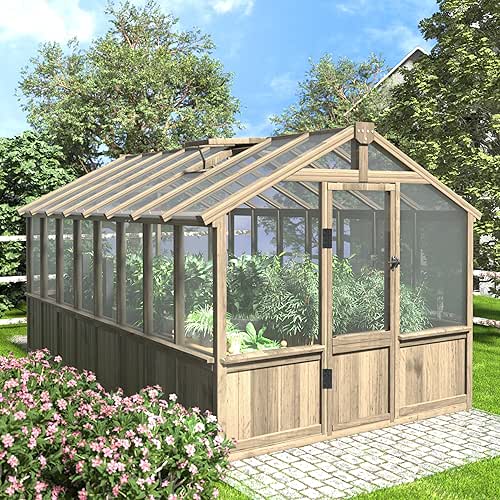
Greenhouse B: Large Wooden Polycarbonate Greenhouse
Greenhouse B is described in the original article as a wooden walk-in greenhouse with multiwall polycarbonate panels and an adjustable roof.
Its traditional wooden construction may appeal to gardeners who want a greenhouse that complements an established backyard landscape.
The original article contains two affiliate shortcodes in this product section. Both are preserved below.
Features and Benefits of Greenhouse B
- Adjustable roof: The original listing describes a roof opening that can be adjusted to approximately 45 degrees.
- Ventilation control: Adjustable roof openings help manage warm air and humidity.
- Wooden frame: Provides a traditional appearance and structural support.
- Reinforced construction: The original description refers to sturdy base supports and additional reinforcement.
- Multiwall polycarbonate panels: Provide light transmission and some insulation.
- UV-protective glazing: The original listing describes UV protection from the panels.
- Versatile growing area: Can accommodate vegetables, flowers, containers, and gardening equipment.
- Overall dimensions: Approximately 96 inches wide, 190.2 inches long, and 90.6 inches high.
- Door dimensions: Approximately 29.1 inches wide and 71.4 inches high.
- Shipping: The original listing describes delivery in multiple packages.
Best suited for: Gardeners who prefer a wooden greenhouse design with substantial interior space and adjustable ventilation.
Things to consider: Wooden greenhouse frames require periodic inspection and maintenance. Confirm whether both affiliate listings refer to the same configuration before purchasing, and verify current dimensions and specifications.
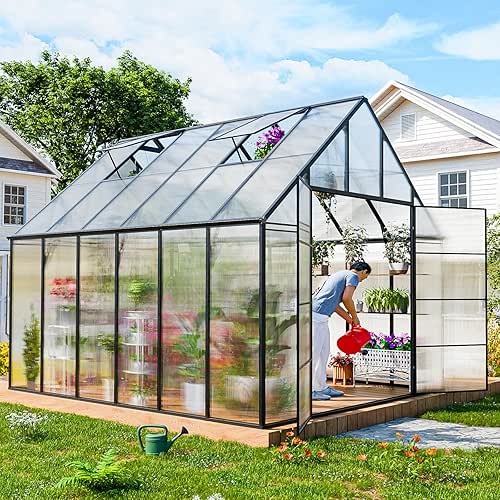
Greenhouse C: CDCASA 10 x 12 ft Polycarbonate Greenhouse
Greenhouse C is a spacious walk-in greenhouse with twin-wall polycarbonate panels, aluminum framing, roof ventilation, and a modular assembly system.
The original listing describes features intended to simplify installation while providing a substantial growing area for backyard gardeners.
Features and Benefits of Greenhouse C
- Large greenhouse design: Listed as a 10 x 12 ft greenhouse.
- Overall dimensions: Approximately 148.3 inches long, 122 inches wide, and 119.4 inches high according to the original listing.
- 4 mm twin-wall polycarbonate: Provides lightweight, impact-resistant glazing.
- Light transmission: The original listing advertises approximately 70% transmission; confirm current specifications.
- UV protection: The original description advertises UV-blocking performance.
- Rust-resistant aluminum frame: Provides the primary structure.
- Quick-connect assembly: Designed to simplify framing connections.
- Roof ventilation: Adjustable roof vents help release excess heat.
- Rain gutters: Located along the roof edges to direct runoff.
- Swing door: Provides access to the greenhouse interior.
- Anchoring options: The original listing describes several methods for securing the base.
- Snow-load rating: The original description advertises up to 20 psf; verify current manufacturer specifications and installation requirements.
Best suited for: Gardeners seeking a spacious rigid-panel greenhouse with substantial interior height and multiple ventilation features.
Things to consider: Review foundation requirements and verify that the greenhouse is suitable for local wind and snow conditions.
Greenhouse D: 12 x 13.5 ft Large Aluminum Polycarbonate Greenhouse
Greenhouse D is a large walk-in structure designed to provide generous growing space and additional interior height.
The original listing highlights 6 mm twin-wall polycarbonate panels, reinforced aluminum framing, four ventilation openings, and double doors.

Features and Benefits of Greenhouse D
- Large growing area: Approximately 12 x 13.5 feet according to the original description.
- Overall height: Approximately 9 feet.
- Sidewall height: The original listing describes approximately 5.5-foot walls.
- 6 mm twin-wall polycarbonate: Provides translucent glazing with useful insulation.
- UV protection: The original listing advertises UV-protective glazing.
- Aluminum frame: The original description specifies approximately 1.5 mm framing material.
- Reinforced uprights: Includes additional corner and middle support posts according to the listing.
- Four ventilation openings: Help regulate airflow and humidity.
- Double swing doors: Provide wider access for gardeners and equipment.
- Quick-connector assembly: Designed to simplify installation.
- Weather ratings: The original listing advertises a 70 mph wind rating and 30 psf snow-load capacity; verify current ratings and required installation methods.
Best suited for: Gardeners seeking a tall, spacious greenhouse with multiple vents and convenient double-door access.
Things to consider: Large rigid-panel greenhouses require careful foundation planning and secure anchoring. Check local building requirements before installation.
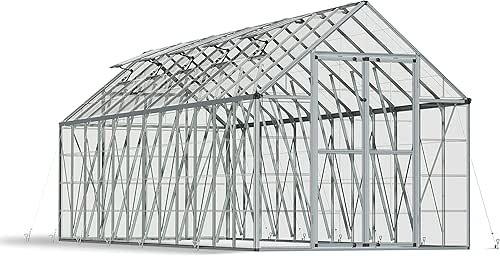
Greenhouse E: Snap & Grow Polycarbonate Greenhouse
Greenhouse E is described in the original article as a Snap & Grow greenhouse with clear polycarbonate panels, an aluminum frame, and a galvanized steel perimeter base.
The design emphasizes light transmission, convenient access, and an assembly system intended for homeowners.
Features and Benefits of Greenhouse E
- Clear polycarbonate panels: The original listing advertises over 90% light transmission.
- UV protection: The original description refers to UV-protective panels.
- Aluminum frame: Designed to resist corrosion.
- Galvanized steel base: Provides a perimeter support component.
- SmartLock connectors: Intended to simplify greenhouse assembly.
- Sliding panel installation: Helps position the glazing during assembly.
- Split door: Provides convenient access and additional ventilation options.
- Roof vents: Help release warm air.
- Replacement parts: The original listing refers to parts and service availability.
Best suited for: Gardeners who prefer a clear-panel greenhouse with a traditional appearance and homeowner-oriented assembly features.
Things to consider: Verify the exact dimensions of the currently offered model, panel specifications, warranty terms, and structural ratings before purchasing.
Which Large Greenhouse Is Best for Your Backyard?
The best choice depends on how much growing space you need and which construction style suits your climate and budget.
Greenhouse A provides substantial tunnel-style growing space, while Greenhouse B offers traditional wooden construction. Greenhouses C and D provide larger rigid-panel structures with aluminum framing, and Greenhouse E emphasizes clear glazing and convenient assembly features.
Compare the total installed cost, ventilation capacity, weather ratings, and long-term maintenance requirements before making a final decision.
Benefits of Large Greenhouses
1. More Growing Space
Large greenhouses provide room for a greater number of plants, larger containers, raised beds, and more substantial growing equipment.
Additional floor space can also improve access for watering, pruning, harvesting, and maintenance.
2. Greater Growing Flexibility
A spacious greenhouse can accommodate different crops and growing methods, including container gardening, raised beds, vertical trellises, and suitable hydroponic systems.
3. Longer Growing Seasons
Greenhouses help reduce direct exposure to outdoor weather and can support earlier spring planting or later autumn harvests.
Year-round growing may require supplemental heating, lighting, or cooling depending on local conditions.
4. Protection from Wind and Rain
Greenhouses shelter plants from direct wind and heavy rainfall when the structure is properly designed and secured.
5. Separate Growing Zones
Larger greenhouses may allow gardeners to organize different crops into separate areas according to their needs.
However, creating truly different temperature or humidity zones generally requires physical separation and appropriate environmental controls.
6. Better Organization
Growing benches, shelves, worktables, and storage areas can help keep gardening activities organized.
7. Opportunities for Advanced Gardening
A large greenhouse can support propagation, hydroponics, trellised crops, and other specialized growing techniques.
Types of Large Backyard Greenhouses
Tunnel Greenhouses
Tunnel greenhouses typically use curved steel or other suitable framing covered with greenhouse film or reinforced fabric.
They can provide substantial growing space at a different cost and maintenance profile from rigid-panel structures.
Polycarbonate Greenhouses
Polycarbonate greenhouses use rigid panels that are relatively lightweight and impact-resistant.
Multiwall panels can provide improved insulation compared with some single-layer glazing systems.
Glass Greenhouses
Glass greenhouses offer excellent clarity and a traditional appearance.
They typically require substantial framing and careful installation because of the weight and breakability of glass.
Wooden Greenhouses
Wooden greenhouses can complement traditional garden landscapes and may be customized for particular layouts.
Wood requires periodic maintenance to manage moisture, decay, and weather exposure.
Freestanding Greenhouses
Freestanding greenhouses are independent structures that can be positioned in suitable locations throughout a backyard.
Attached and Lean-To Greenhouses
Attached greenhouses share a wall or structural connection with an existing building.
They require careful attention to waterproofing, drainage, ventilation, and building requirements.
Greenhouse Covering Materials Compared
| Material | Advantages | Considerations |
|---|---|---|
| Polyethylene Film | Lightweight and commonly used on tunnel greenhouses. | Requires periodic inspection and eventual replacement. |
| Reinforced PE Fabric | Provides flexible coverage with reinforcement. | Durability varies by product and installation. |
| Polycarbonate | Impact-resistant, lightweight, and available in multiwall designs. | Requires compatible framing and careful cleaning. |
| Glass | Excellent clarity and traditional appearance. | Heavy and more vulnerable to breakage. |
How to Choose the Right Large Greenhouse Size
Choosing the correct greenhouse size involves balancing available land, crop requirements, and the amount of work you intend to perform inside the structure.
Consider the Growing Area
Estimate the space required for mature plants rather than calculating capacity using seedling dimensions.
Allow Room for Walkways
Maintain practical access to growing beds, benches, irrigation equipment, and exits.
Plan for Vertical Growing
Tall greenhouses can accommodate trellised tomatoes, cucumbers, and other climbing crops.
Leave Space for Equipment
Consider water tanks, irrigation controls, heaters, fans, shelving, and other equipment.
Think About Future Expansion
Choose a greenhouse size that allows reasonable growth in your gardening activities without creating unnecessary operating costs.
Choosing the Best Location for a Large Greenhouse
Sunlight
Choose a location with sufficient sunlight for the crops you intend to grow.
Drainage
Avoid low-lying areas where water accumulates after rainfall.
Wind Exposure
Consider prevailing winds and nearby obstructions while ensuring the structure is properly engineered and anchored.
Access to Water
Locate the greenhouse where irrigation water can be supplied conveniently.
Electrical Access
Plan appropriate electrical service if you intend to use heaters, fans, lighting, or automated controls.
Maintenance Clearance
Leave sufficient space around the greenhouse for cleaning, drainage, and repairs.
Large Greenhouse Foundations and Anchoring
Foundation and anchoring requirements vary according to greenhouse size, frame construction, soil conditions, and local weather.
Ground Anchors
Some tunnel greenhouse designs use approved ground anchors or buried frame components.
Concrete Foundations
Certain permanent greenhouses require concrete footings, slabs, or other engineered foundations.
Perimeter Bases
Many rigid-panel greenhouse kits include galvanized steel or aluminum perimeter bases that must be secured according to manufacturer instructions.
Local Building Requirements
Check applicable permits, setbacks, wind ratings, and snow-load requirements before construction.
Ventilation and Temperature Control for Large Greenhouses
Roof Vents
Roof vents allow warm air to escape and are common on rigid-panel greenhouse kits.
Side Ventilation
Side openings can improve natural airflow when positioned appropriately.
Exhaust Fans
Powered exhaust fans may be necessary when natural ventilation cannot remove enough heat.
Circulation Fans
Circulation fans help reduce stagnant air and improve temperature distribution.
Automatic Controls
Thermostats and compatible controllers can operate ventilation equipment according to greenhouse temperature.
Shade Cloth
Appropriate shade cloth can reduce excessive solar heating during hot weather.
Heating a Large Greenhouse in Winter
Heating requirements depend on greenhouse size, glazing, insulation, local climate, and the temperature requirements of your crops.
Electric Greenhouse Heaters
Suitable electric heaters can provide supplemental warmth when installed according to applicable safety requirements.
Thermostats
Thermostatic controls help maintain suitable temperatures and reduce unnecessary heating.
Insulation
Multiwall glazing and suitable insulation can reduce heat loss, although ventilation and moisture management must still be maintained.
Thermal Mass
Water containers and other materials can absorb daytime warmth and release some heat as temperatures fall.
Thermal mass does not replace supplemental heating during prolonged freezing conditions.
Backup Planning
If sensitive plants depend on powered heating or ventilation, consider how you will respond to power outages and equipment failures.
Watering and Irrigation Systems for Large Greenhouses
Drip Irrigation
Drip systems deliver water near plant roots and can reduce unnecessary wetting of foliage.
Micro-Sprinklers and Misting
Micro-sprinklers and misting systems may be useful for certain crops and propagation applications.
Excessive humidity can encourage disease, so these systems require careful management.
Automatic Irrigation
Timers and irrigation controllers can simplify watering routines when properly configured.
Rainwater Collection
Greenhouses with suitable gutters may direct rainwater into storage containers for later use.
Hydroponic Growing Systems
Large greenhouses can accommodate hydroponic towers, channels, and other soilless systems when space, water management, and environmental conditions are suitable.
Best Plants to Grow in a Large Greenhouse
Tomatoes
Tomatoes can grow successfully in greenhouses when sufficient light, warmth, irrigation, support, and pollination are provided.
Cucumbers
Cucumbers can be trained vertically to use greenhouse height efficiently.
Peppers
Peppers benefit from suitable warm conditions and consistent moisture.
Leafy Greens
Lettuce, spinach, kale, and other leafy vegetables may be grown during suitable cooler periods.
Herbs
Basil, parsley, oregano, thyme, and other herbs can be grown in beds or containers.
Strawberries
Strawberries can be grown in containers or suitable growing systems when pollination, irrigation, and airflow are managed.
Flowers and Ornamentals
Large greenhouses can support a variety of ornamental plants when their environmental requirements are met.
Large Greenhouse Layout and Organization Ideas
Raised Growing Beds
Raised beds create organized planting areas and can make soil management more convenient.
Growing Benches
Benches provide space for propagation trays, containers, and plant maintenance.
Vertical Trellises
Trellises support climbing crops and help make efficient use of greenhouse height.
Propagation Area
A dedicated propagation area can help organize seed starting and young plants.
Storage and Work Area
Reserve suitable space for gardening tools, potting supplies, and maintenance activities.
Hydroponic Growing Area
Hydroponic systems can be incorporated into suitable greenhouse layouts when water, electricity, and drainage are managed safely.
How Much Does a Large Backyard Greenhouse Cost?
Large greenhouse costs vary widely according to construction type, dimensions, materials, installation requirements, and environmental-control equipment.
Greenhouse Kit Cost
Tunnel greenhouses, rigid-panel kits, and custom structures have different purchase prices and expected maintenance requirements.
Foundation and Installation
Site preparation, foundations, anchoring, and installation labor can add substantially to the total cost.
Ventilation and Cooling
Fans, vents, shade cloth, and controllers may be necessary depending on greenhouse size and climate.
Heating and Insulation
Cold-weather growing can increase energy costs significantly.
Irrigation and Water Supply
Drip irrigation, water storage, pumps, and automation may add to initial expenses.
Maintenance
Allow for replacement coverings, panel repairs, hardware, and routine cleaning.
Maintenance Tips for Large Greenhouses
Inspect the Structure
Check framing, connections, braces, and anchors for damage or loosening.
Clean Glazing and Covers
Use cleaning methods approved for the greenhouse covering material.
Maintain Ventilation
Test vents, fans, automatic openers, and related controls regularly.
Clear Gutters and Drainage
Remove leaves and debris that can obstruct water flow.
Manage Pests and Disease
Inspect plants frequently and maintain appropriate greenhouse sanitation.
Prepare for Severe Weather
Follow manufacturer guidance for wind, snow, and other weather conditions.
Inspect Heating Equipment
Maintain heating systems according to manufacturer instructions and applicable safety requirements.
Common Large Greenhouse Problems
Overheating
Improve ventilation, shading, and cooling when greenhouse temperatures rise excessively.
High Humidity
Improve airflow and adjust watering practices to reduce persistent condensation.
Uneven Temperatures
Use appropriate air circulation and monitor temperatures in different greenhouse areas.
Cover or Panel Damage
Inspect glazing and coverings regularly and replace damaged materials using compatible components.
Poor Drainage
Maintain gutters and improve surrounding site drainage where necessary.
Insufficient Anchoring
Verify that the foundation and anchoring system meet the manufacturer’s requirements and applicable local standards.
Frequently Asked Questions About Large Greenhouses
1. How much space do I need for a large greenhouse in my backyard?
The required space depends on the greenhouse dimensions, door clearance, surrounding access, drainage, and local property setbacks. Measure the complete installation area before purchasing.
2. Are large greenhouses suitable for all climates?
Large greenhouses can be used in many climates, but their design and environmental controls must be appropriate for local conditions. Heating, cooling, insulation, and structural ratings vary by location.
3. Do I need special skills to assemble a large greenhouse?
Some greenhouse kits are designed for experienced DIY installation, while others may require professional assistance. Foundation work, structural assembly, and electrical installation may involve specialized skills.
4. How much does a large greenhouse typically cost?
Costs vary widely according to size, construction type, materials, installation, and equipment. Compare the total installed cost rather than the greenhouse kit price alone.
5. Can a large greenhouse be used for purposes other than gardening?
Some greenhouse designs may accommodate seating, plant displays, or other appropriate activities. However, structures intended for regular human occupancy may require additional safety measures and building approvals.
6. What is the best material for a large greenhouse?
There is no single best material for every situation. Polycarbonate, glass, and polyethylene coverings each have different advantages in insulation, durability, cost, and maintenance.
7. Are tunnel greenhouses suitable for year-round use?
Some tunnel greenhouses can be used year-round, but their suitability depends on structural design, covering materials, local weather, and heating or ventilation provisions.
8. Do large greenhouses need foundations?
Large greenhouses require suitable support and anchoring. The specific foundation design depends on the greenhouse and local conditions.
9. How do I ventilate a large greenhouse?
Ventilation may include roof vents, side openings, exhaust fans, circulation fans, and automated controls.
10. Can I grow vegetables year-round in a large greenhouse?
Yes, if you can maintain suitable temperature, light, and growing conditions throughout the year. Supplemental heating or lighting may be required.
11. Can I install hydroponics in a large greenhouse?
Yes. Hydroponic systems can be incorporated into suitable greenhouses when water supply, drainage, electrical safety, and environmental control are properly planned.
12. How do I keep a large greenhouse warm in winter?
Use suitable insulation, weather sealing, and appropriately sized heating equipment when needed.
13. What vegetables grow well in large greenhouses?
Tomatoes, cucumbers, peppers, leafy greens, herbs, and other suitable crops can be grown when their environmental requirements are met.
14. How long does a large greenhouse last?
Service life depends on construction materials, glazing quality, local weather, installation, and maintenance. Different components may require replacement at different intervals.
15. Is a large greenhouse worth the investment?
A large greenhouse can be worthwhile for gardeners who need additional growing space, extended seasonal production, or specialized growing facilities. The value depends on how frequently it is used and the total cost of ownership.
Recommended Reading
Explore these related greenhouse guides for more information about greenhouse designs, materials, and growing equipment:
- Best Small Greenhouse for Your Backyard — Compare compact greenhouse designs and features.
- Best Polycarbonate Greenhouses for Your Backyard — Learn about rigid-panel greenhouse construction and glazing.
- Traditional Greenhouses — Explore traditional greenhouse styles and materials.
- Lean-to Greenhouse — Discover space-saving greenhouse designs.
- Polytunnel Greenhouse — Learn about tunnel-style greenhouse construction.
Final Thoughts: Choosing the Best Large Greenhouse for Your Backyard
The best large greenhouses for your backyard provide a practical balance of growing space, durable construction, ventilation, and long-term value.
Whether you prefer a tunnel greenhouse, a wooden structure, or a rigid-panel polycarbonate design, choose a greenhouse that suits your local climate, available space, and gardening goals.
Before purchasing, compare manufacturer specifications, foundation requirements, weather ratings, and total installation costs.
With thoughtful planning and proper maintenance, a large backyard greenhouse can provide a productive growing environment for vegetables, herbs, flowers, and other plants for many seasons.
For more greenhouse guides, growing advice, and equipment information, visit Greenhouse Guide.